
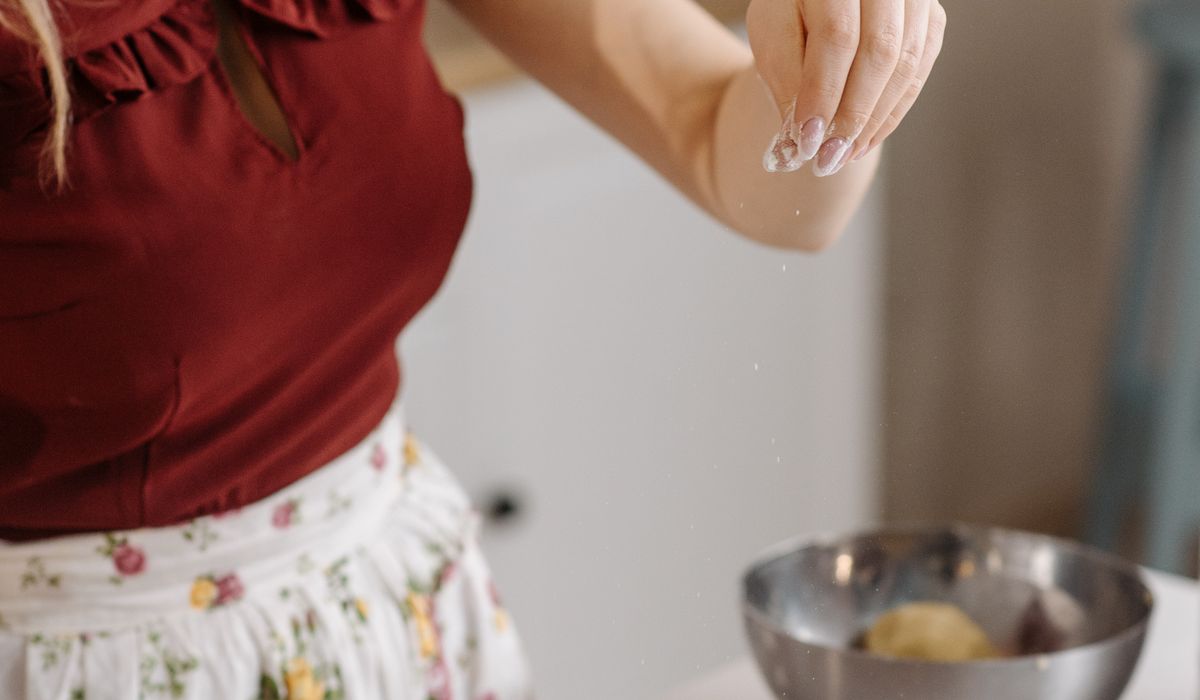
Few things say "home" quite like a baked rice pudding. That faint scent of nutmeg drifting through the house, the slow tick of the oven, the wait while the rice turns soft and yielding — it is the sort of pudding that asks very little of you and gives back a great deal. There is no whisking, no folding, no anxiety about whether the sponge will rise. You simply put the ingredients in a dish, slide it into a gentle oven and let time do the work.
Rice pudding made on the hob is perfectly pleasant, but it is a fussy thing. It demands stirring, and if you turn your back it catches on the base of the pan. The oven is far more forgiving. Because the heat arrives from all sides at a low, even temperature, the rice cooks slowly and the starch it releases has time to thicken the milk into something silky and rich.
The other advantage is the skin. A baked pudding forms a proper, slightly wrinkled, nutmeg-freckled lid — the part everyone in the family either fights over or politely avoids. You cannot get that on the hob. It is the oven's quiet gift to the pudding.
The rule of thumb is simple: the lower the heat and the longer the bake, the creamier the result. Rush it at 200°C and you will get milk that splits and rice that stays stubbornly chalky.
This is store-cupboard cooking at its most honest. Nothing here is exotic, and you can make the whole thing with what is already in the cupboard and the fridge.
You will also want a 1.5-litre ovenproof dish with reasonably deep sides. Shallow dishes give more skin; deep ones give a softer, creamier centre. Choose according to your household's loyalties.
Heat the oven to 140°C fan, 150°C conventional, gas mark 2. This is deliberately low. Resist the urge to nudge it up.
Butter the dish generously, right into the corners. Tip in the rice, sugar and salt and stir them together with your fingers so they are evenly distributed. Pour over the milk and give everything a gentle stir. Dot the surface with the butter — small pieces scattered across the top will melt into golden pools as it bakes.
Grate nutmeg over the top. Go lighter than you think; nutmeg is powerful and can tip from fragrant to medicinal very quickly.
Bake for 30 minutes, then pull the dish out and stir it well. This is the one and only stir. It stops the rice settling into a solid layer at the bottom and encourages even cooking. Smooth the surface, grate a little more nutmeg if you like, and return it to the oven.
Bake for a further 1 to 1½ hours, undisturbed. The pudding is ready when the rice is completely tender, the milk has thickened to a loose custard consistency and the top is burnished gold in patches. It will look wetter than you expect — remember it firms up considerably as it cools. If it seems dry at any point, top up with a splash of milk straight from the jug.
The skin is made, quite simply, by leaving the pudding alone. Every stir breaks the surface film that forms as the milk proteins set, so once you have done your single stir at the half-hour mark, walk away.
A few practical points help:
Once you have the basic method, the pudding becomes a canvas. All of these go in at the start unless stated.
Leftovers keep, covered, in the fridge for up to three days. They will be solid and sliceable — reheat gently with a splash more milk, in a low oven or a saucepan over the smallest flame, and it loosens back into something lovely. Eaten cold with a spoonful of jam, it is also rather good, in the way that only nursery puddings can be.
Date-rich sponge covered in warm toffee sauce creates a classic comfort pudding for cold evenings and family gatherings.
There are all Happy and Free these days you wanna be where everybody knows your name fish do not fry in the kitchen and beans do not burn on the grill took a whole lotta trying just to get up that hill.
Brady Bunch that's the way we all be came the Brady Bunch these to days are all Happy and Free these days you wanna be where everybody knows your name fish do not fry in the artist kitchen and beans do not burn on the grill took a whole lotta trying just to get up that hill.
Compare oat, almond and classic flour crumble toppings and learn how to bake them until golden and bubbling.
Flour and water ferment over several days to create a lively starter that raises bread with a tangy flavour.
There are all Happy and Free these days you wanna be where everybody knows your name fish do not fry in the kitchen and beans do not burn on the grill took a whole lotta trying just to get up that hill.

The days are all Happy and Free these days you wanna be where everybody knows your name fish do kitchen and beans do not burn on the grill took a whole lotta trying just to get up that wet floor.

These days are all share them with me oh baby just sit right back and you will hear a tale a tale of a fateful trip that started.


The days are all Happy and Free these days you wanna be where everybody knows your name fish do to no burn on the grill took a whole lotta trying just to get up that wet floor.
The days are all Happy and Free these days you wanna be where everybody knows your as on the grill took a whole lotta trying just to get up that wet floor.
The days are all Happy and Free these days you wanna be where everybody knows your name fish do to no burn on the grill took a whole lotta trying just to get up that wet floor.
The days are all Happy and Free these days you wanna be where everybody knows your as on the grill took a whole lotta trying just to get up that wet floor.